Two days ago we took a day trip to Toledo.
We had a four hour Jewish tour of Toledo. You might think that is a long time, but it was amazing and we wouldn’t have wanted it any shorter.
Our tour guide was unbelievable!! She knew so much about the history of Toledo and Spain, especially the Jewish parts.
We went inside two synagogues that are no longer in use, and have been turned into museums. The first synagogue was Shmuel HaLevi Abulafia or HaNasi. It is named for Shmuel HaLevi Abulafia the businessman, not the talmudist, and the synagogue was built for him, but he gave it to the community. Shmuel was best friends with King Peter (Pedro) of Spain, and was his right hand man.
This synagogue became a national monument 100 years ago, and is the only monument in Toledo with security. It was built in 1361 (in the style of Mudejar), and never was destroyed because in 1492 it became a church. The train station in Toledo was built in the same style as the synagogue.
The second synagogue was Santa Maria Blanca. It was built in the style of a mosque (with five naves/sections), used as a synagogue, and later was a church. It was really cool to see three religious footprints in the same building.
Both of the synagogues were stunning!!
Later, as we were walking in the Jewish quarter, our tour guide pointed out little squares that said חי, had chanukiot, or said ספרד (Spain). The squares were put in by the city of Toledo to let visitors know when they are in the Jewish quarter. If you looked in between the letters of the ספרד squares, you could see the word זכור (remember).
The Jewish quarter is almost 20% of Toledo. The Jewish quarter is surrounded by walls. The walls were for protection, not for a ghetto (the Jewish quarter was never a ghetto). The Jewish community had asked for the wall.
If you are ever in Spain, and go to Toledo, you must have our fabulous tour guide!!
– Naomi

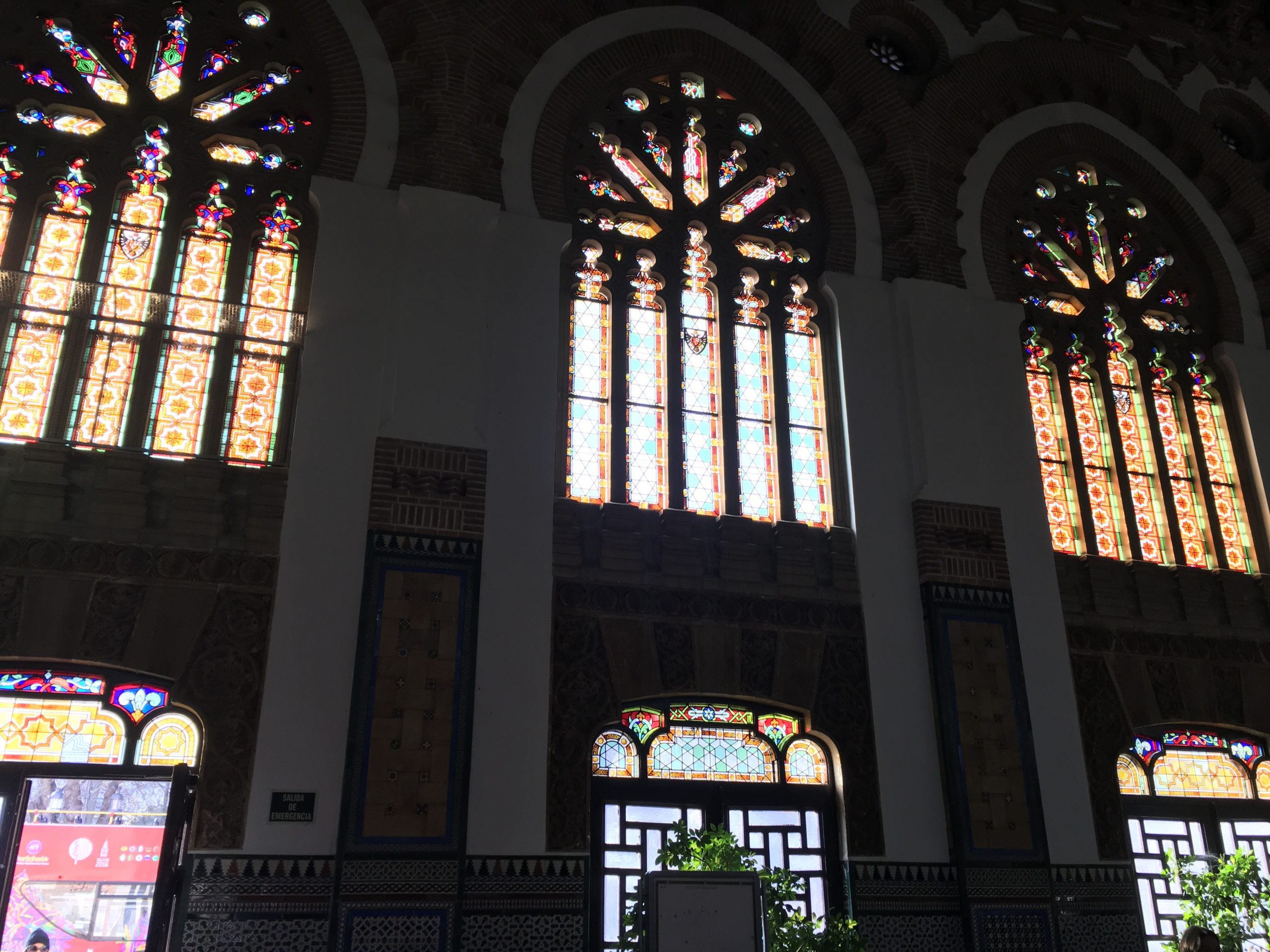 This is in the train station. It is kind of hard to see but the windows are gorgeous
 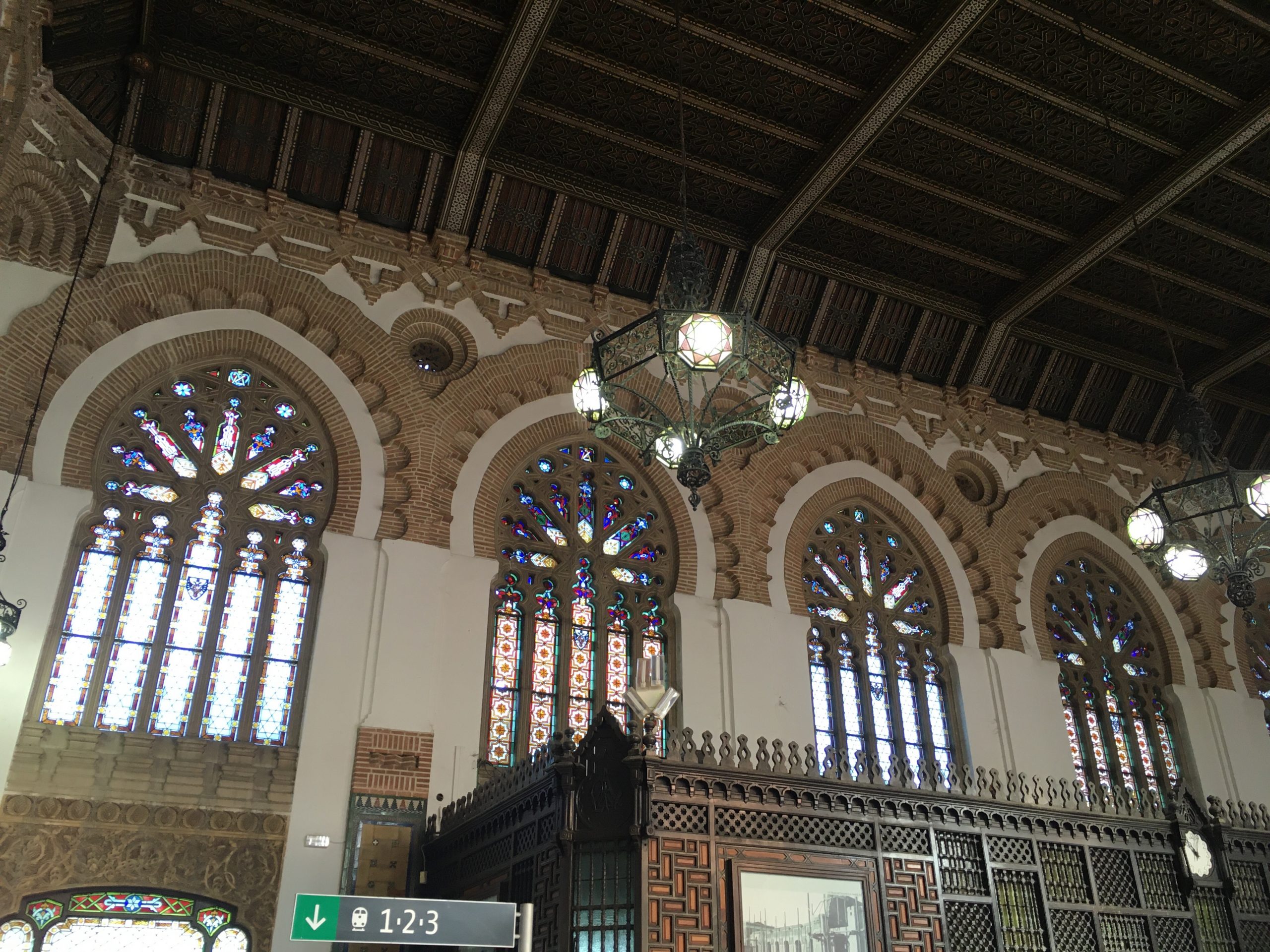 This is also inside the train station
 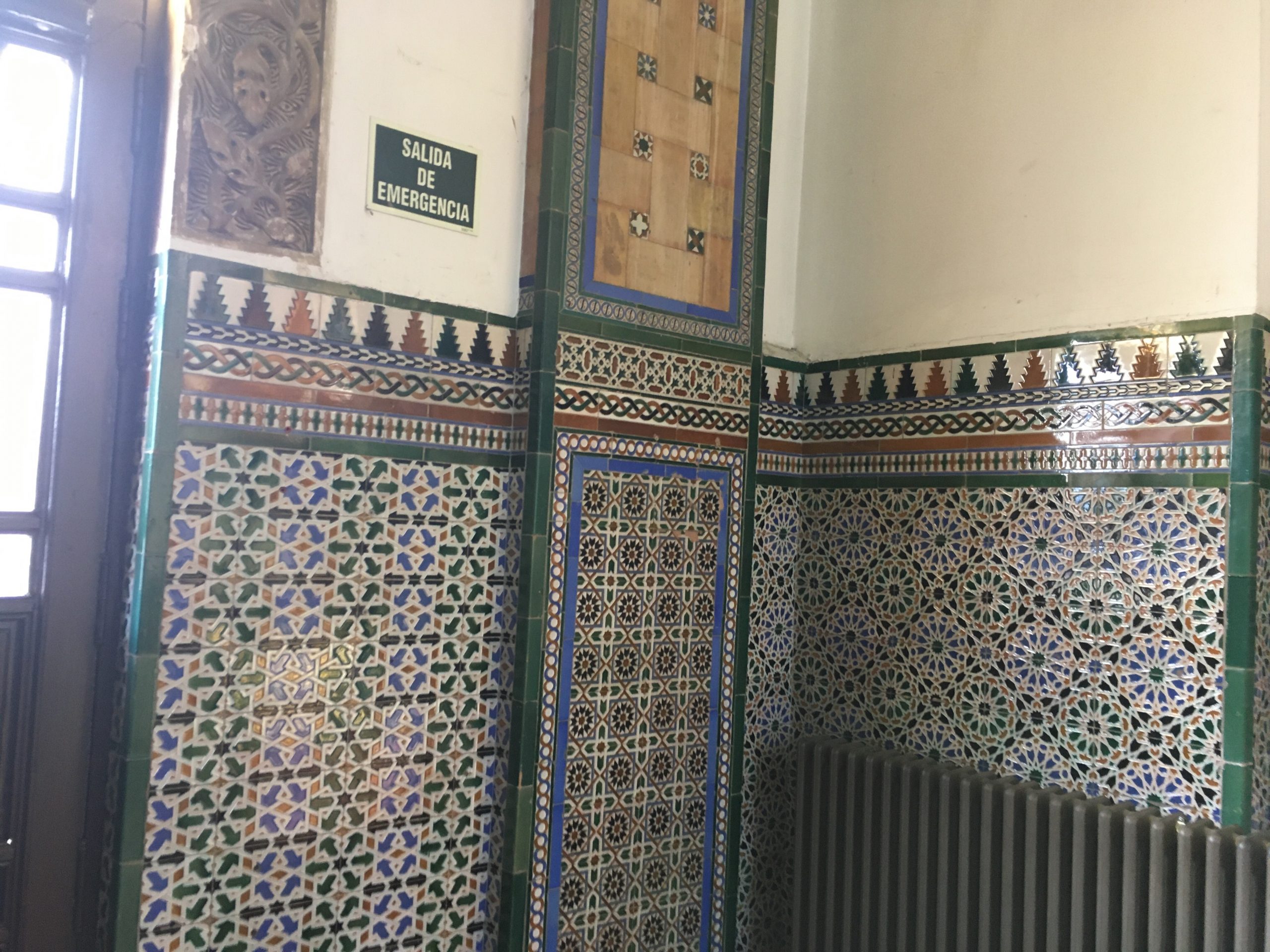 Part of a wall in the train station with pretty designs
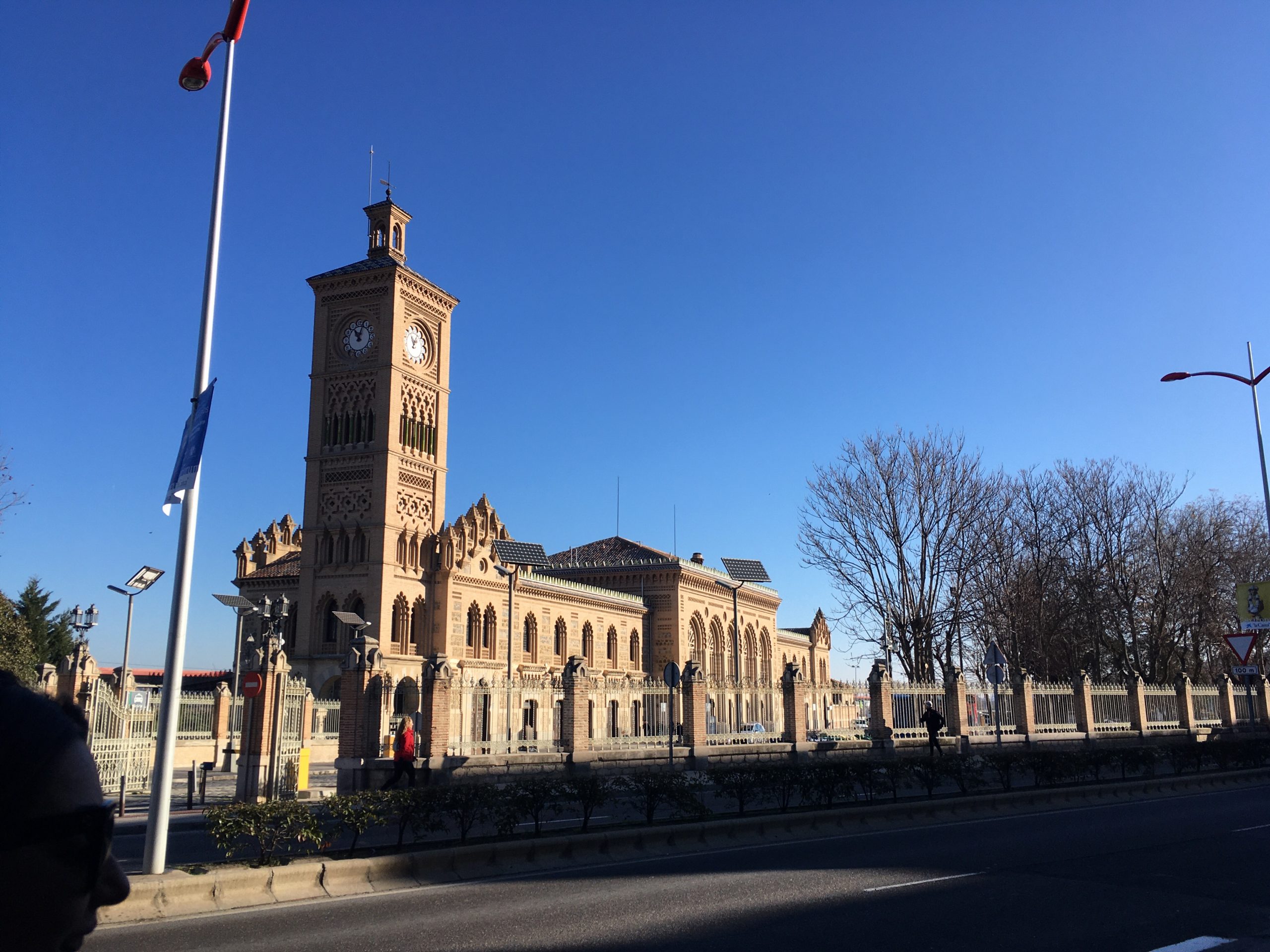 The outside of the train station
 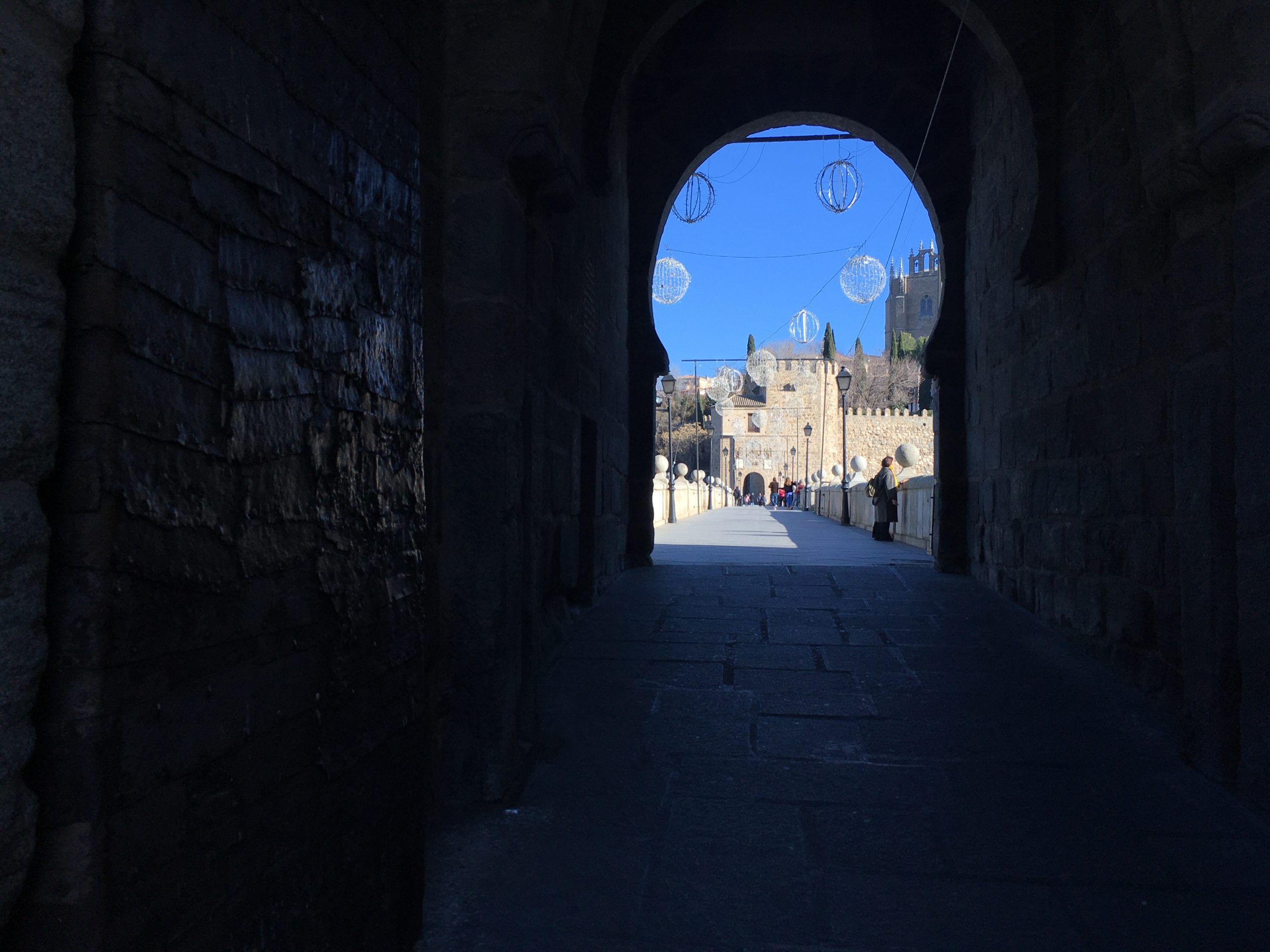 The bridge that goes into Toledo. It was built in the 14th century and was never destroyed. After their expulsion, the Jews left Toledo on this bridge
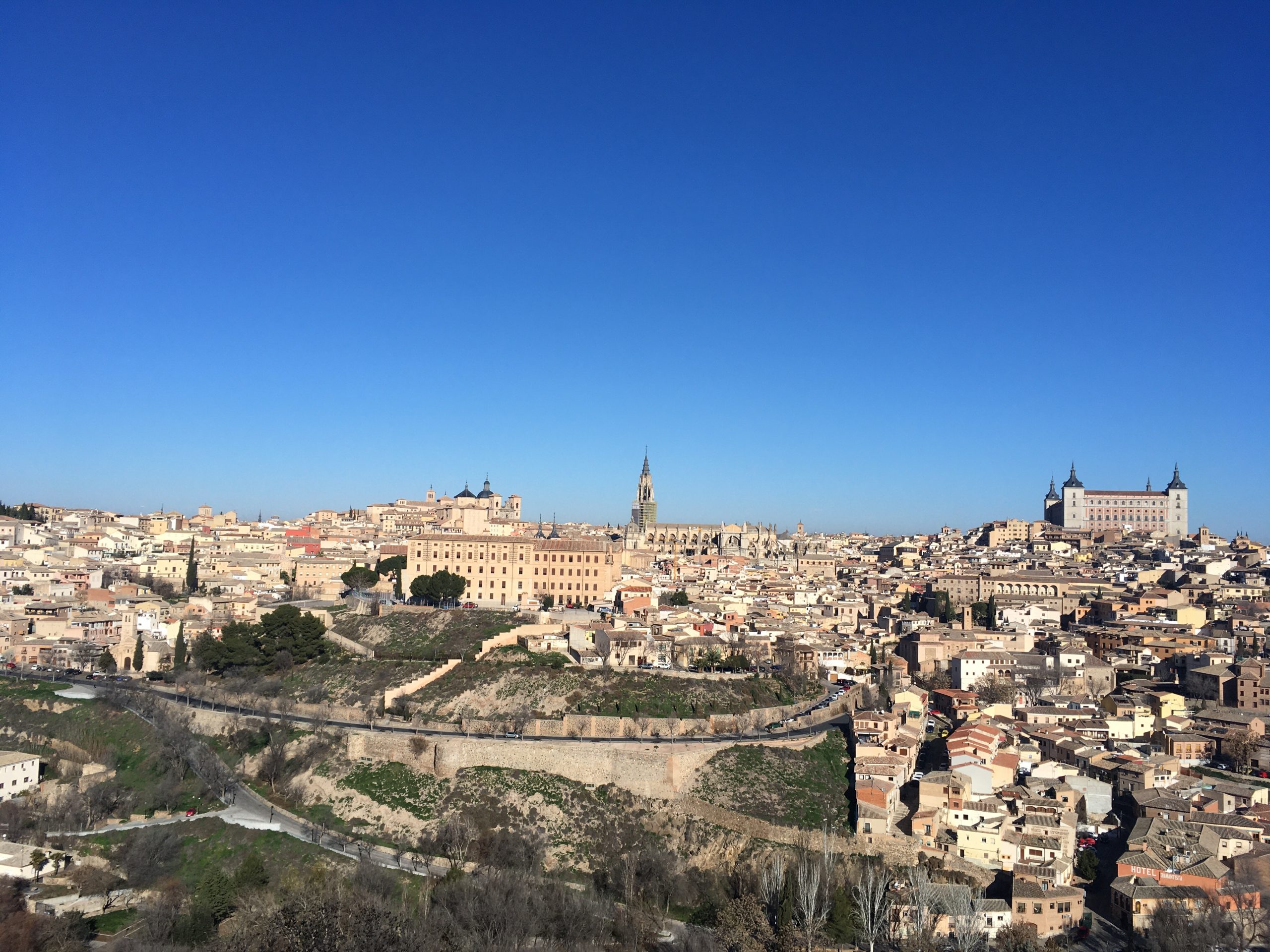 View of Toledo
 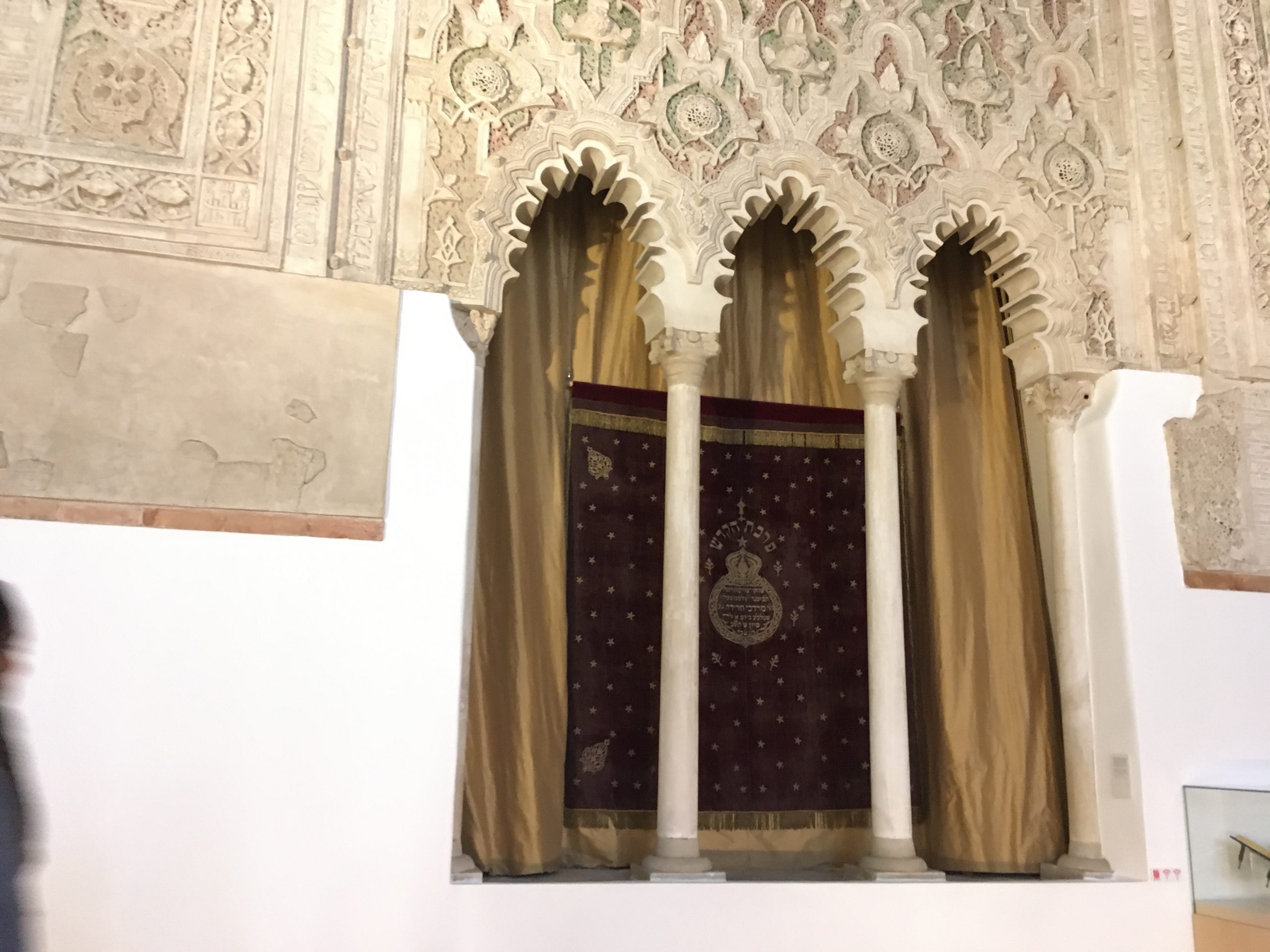 Aron Hakodesh (ארון הקודש) in the Shmuel HaLevi Abulafia Synagogue
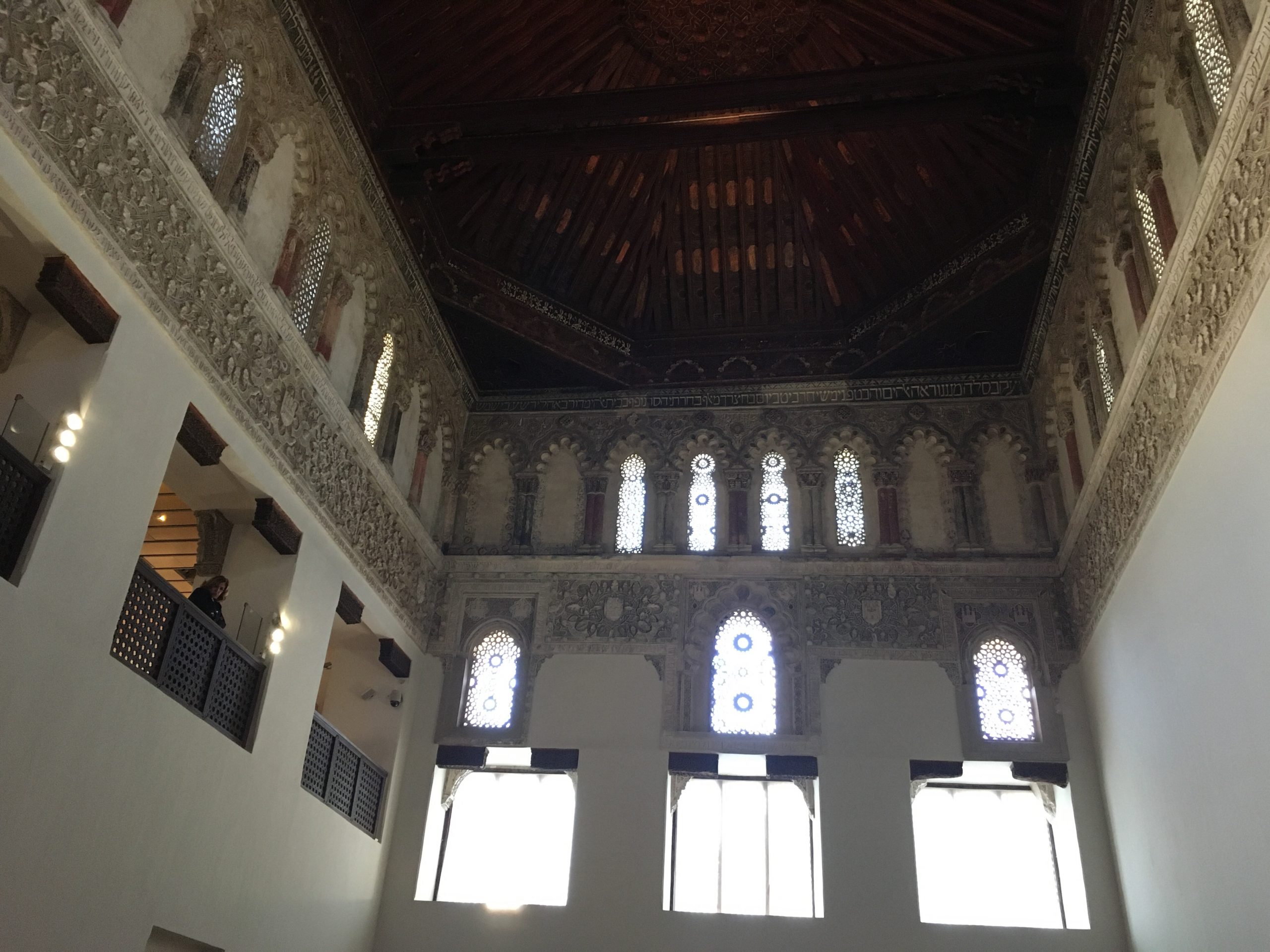 This is the same shul as above
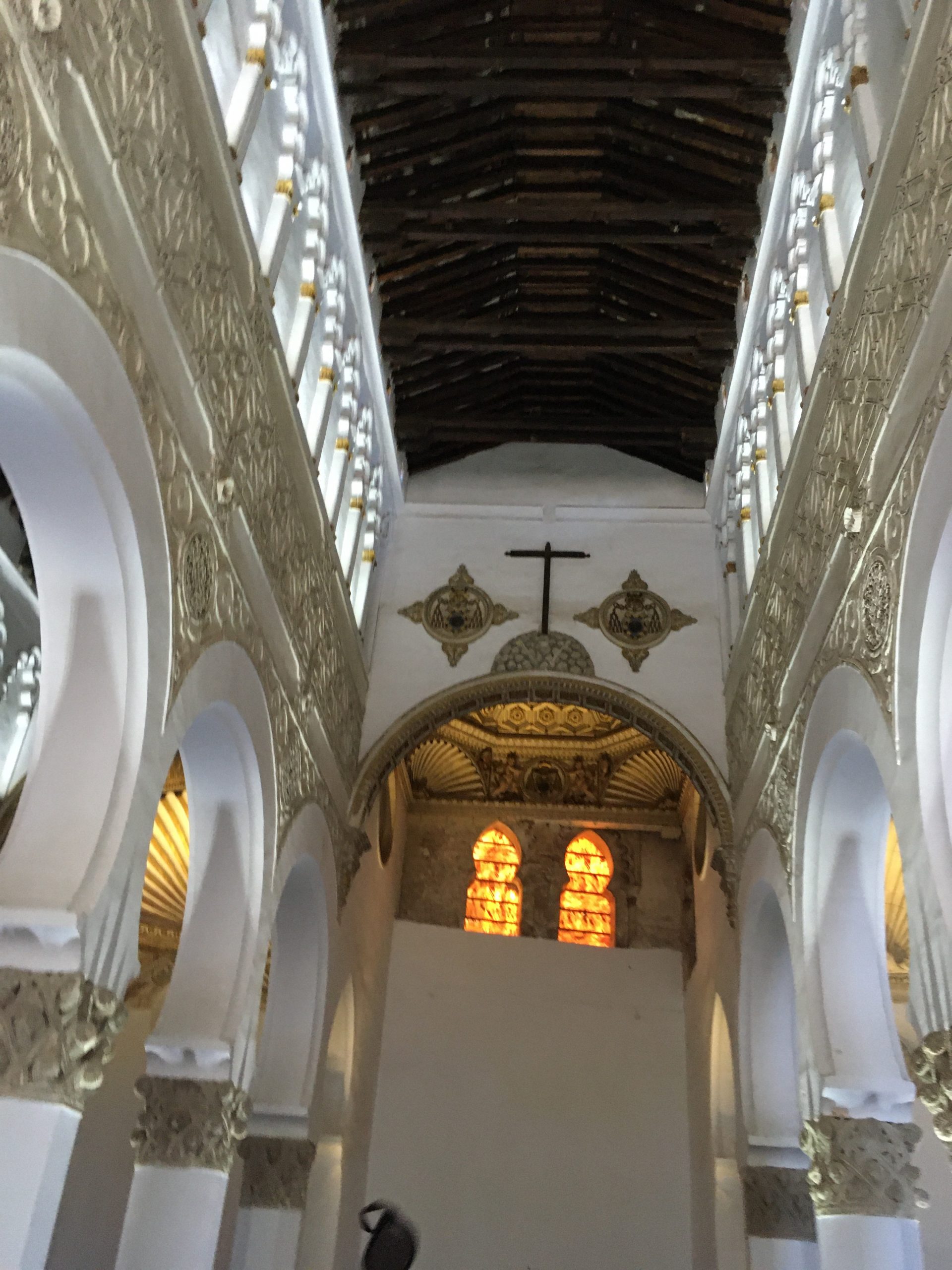 Santa Maria Blanca Synagogue. The building is made by Moorish architects, and you can see a cross, and two stained glass windows in the shape of the Ten Commandments (לוחות הברית).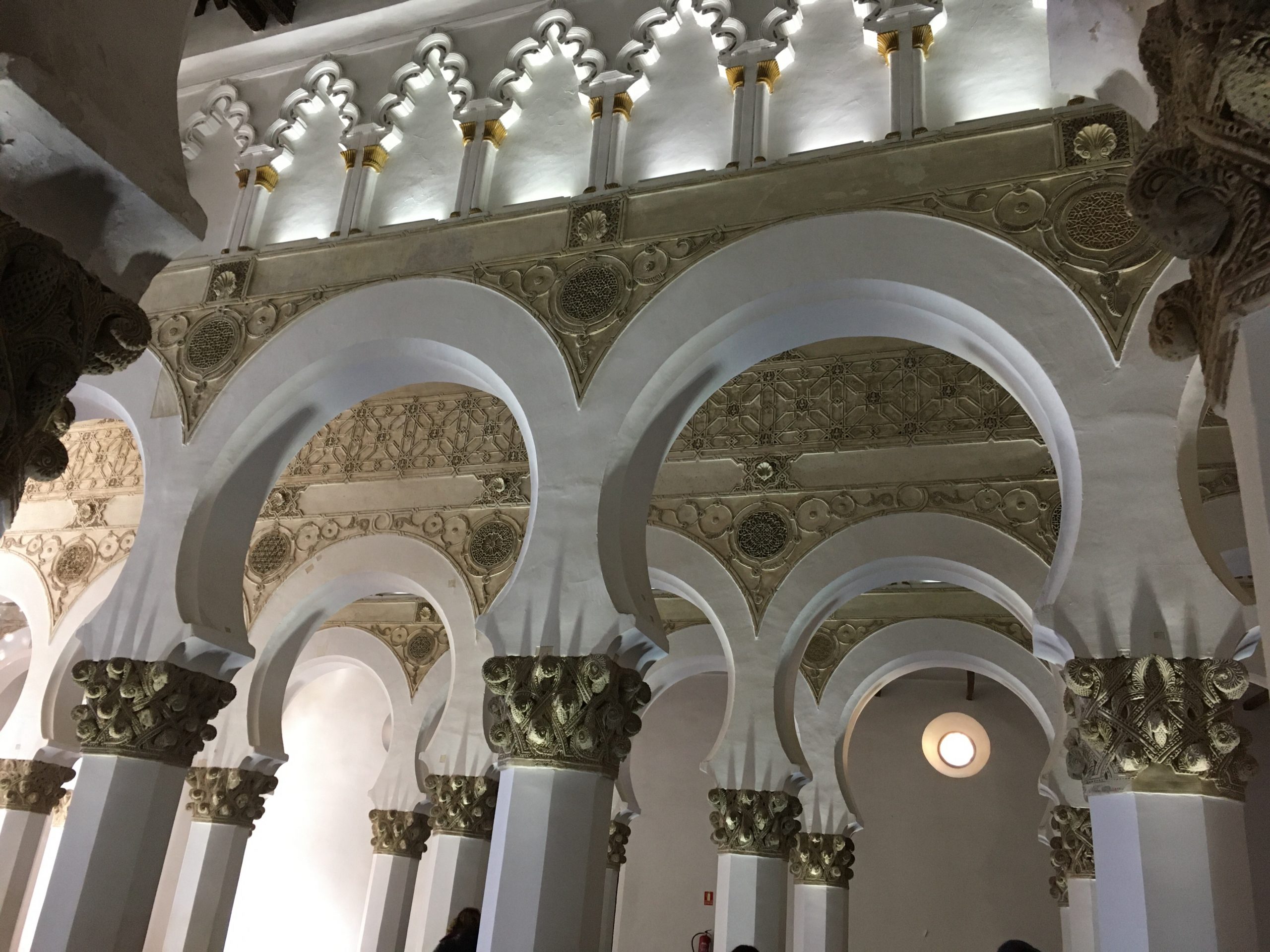
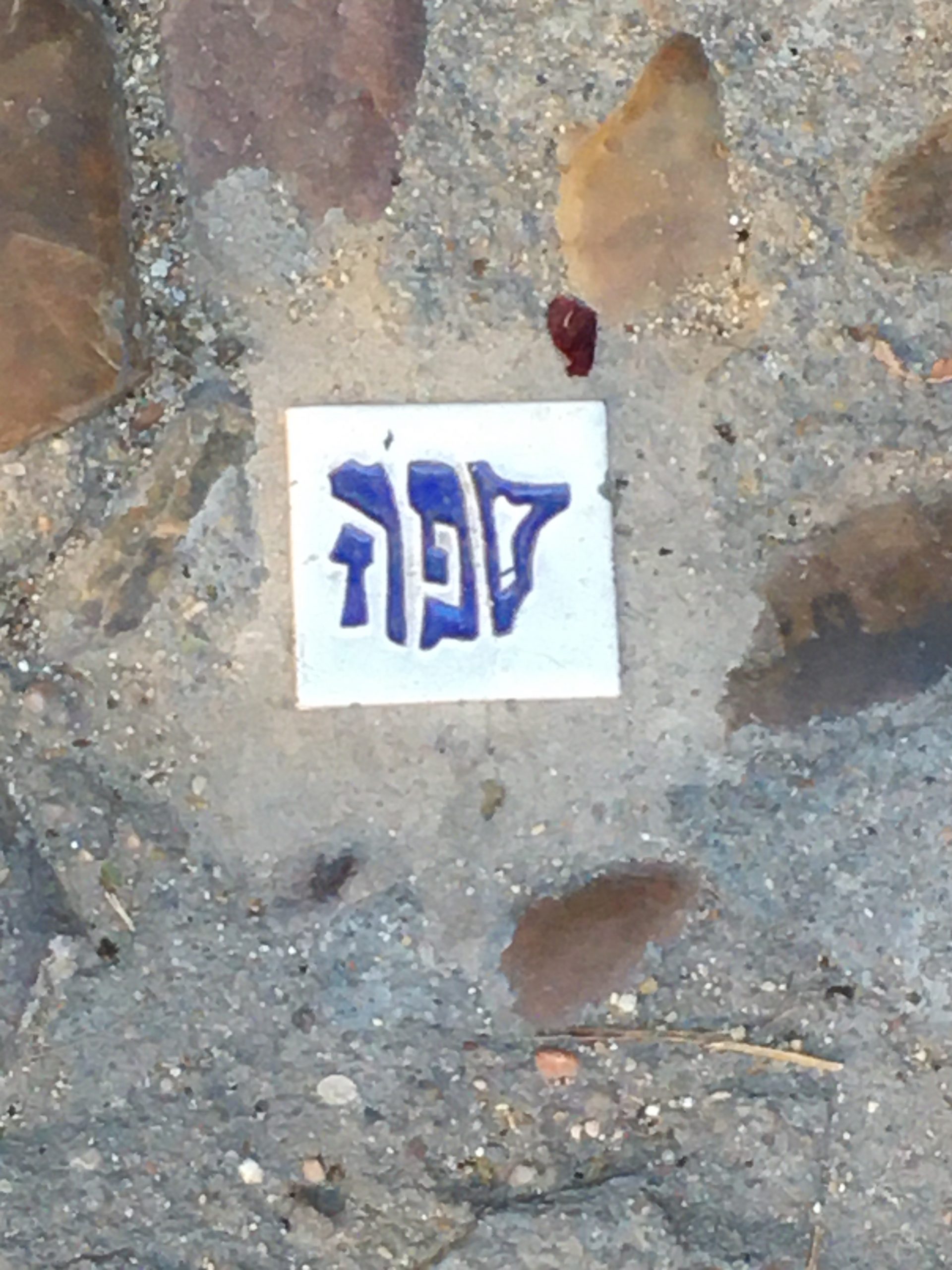
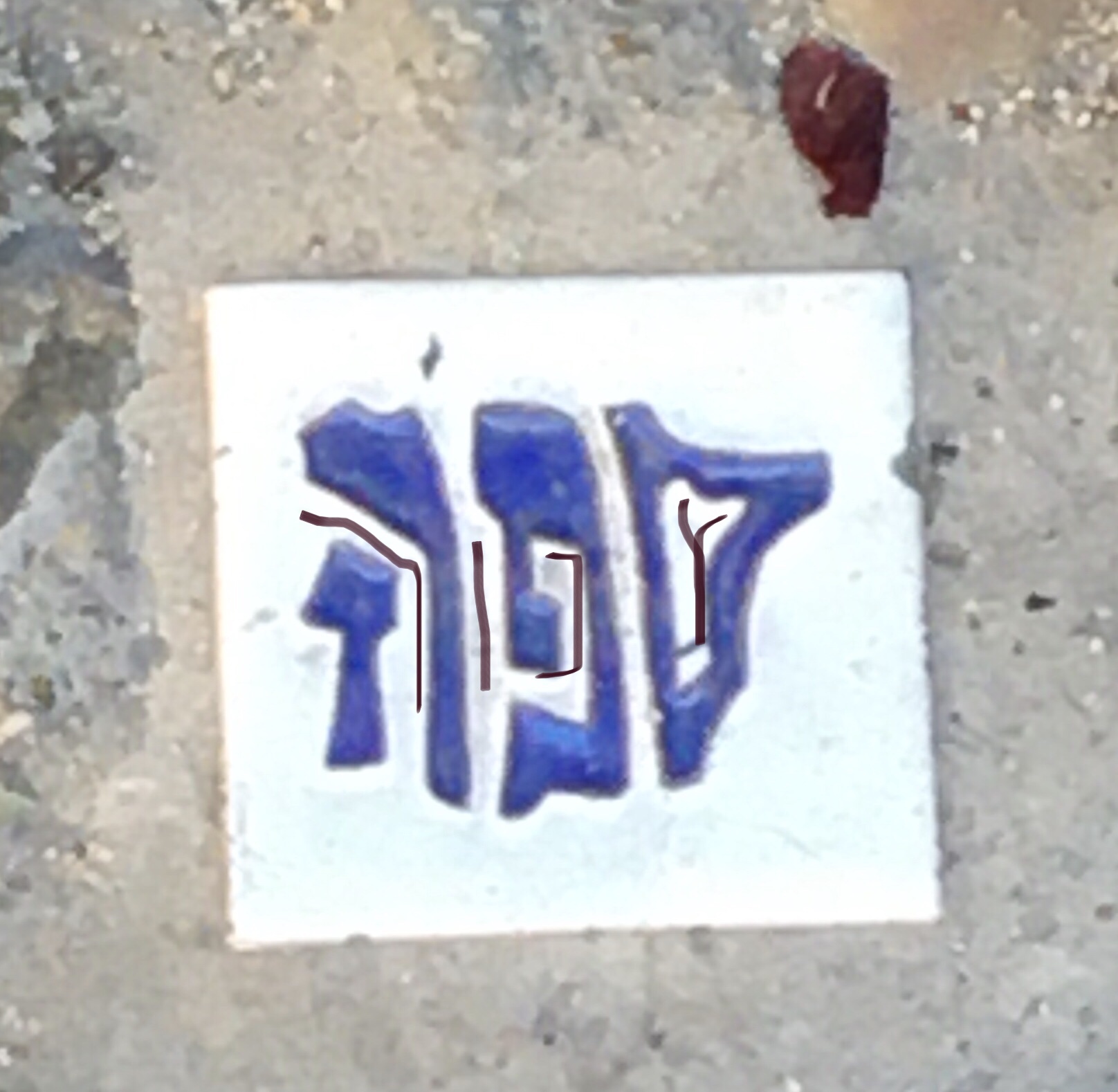 A ספרד/זכור (Spain/remember) tile. I wrote in זכור/remember because it is a little hard to see (the ז looks a little weird). The tiles are on the ground outside