We’re on the bus back from a lovely 48 hours in the Arava desert joining a Hartman rabbinical student program thanks to an invitation by the program’s director, Melila. For those of you unfamiliar with the Arava, it’s the valley shared by Israel and Jordan north of Eilat.
We were staying at kibbutz ketura which was a kibbutz founded by Americans from Young Judea in fall of 1973. And we got to be there for the kibbutz’ 46th birthday and join their special tefilot let by their youth for the occasion.
Kibbutz ketura, unlike many other kibbutzim, has maintained many aspects of communal living including eating together in a chadar ochel and all kibbutz members getting the same monthly stipend (no matter their job including those working outside the kibbutz) with variation only based on tho number of kids at home. And the 280 adult members of the kibbutz share 15 cars (no private car ownership is allowed). The kibbutz makes its money from dates (a very water intense class), solar fields (the kibbutz has the first solar fields in israel and provides Eilat with one third of its power needs and its solar panels are cleaned by solar powered robots), an antioxidant from algae which they grow, tourism and an accounting firm.
This morning, Alexandra and I got up early to a hike to the top of the mountain range right behind ketura. (Sorry no pics because it was Shabbat). We climbed an elevation of about 300 meters (about 1000 feet). At the top, on the mountain range, there were nine metal trash cans that they use as their Hannukkiah and it’s the job of the B’nai mitzvah class (with help of their parents) to light the hannukiah (at twilight and climb down in the dark).
The kibbutz has special lounges for every two school grades (ie first and second grade together) where they go after school and have activities and do their homework. The kibbutz had some amazing playgrounds as well as classic kibbutz playgrounds where they turn old and broken furniture and equipment into climbing equipment. For instance, I saw an old tractor along with old mattresses and other discarded equipment making up one another f nursery school playgrounds. They also have a date tree (which they have named Methushallem) which was grown from a 1900 year old seed found at Masada that an agriculture scientist figured out how to sprout.
Kibbutz ketura is also the location of the Arava institute where Israelis, Palestinians, Gazans, Jordanians and folks from different African countries study environmental issues together (and all eat in the kibbutz chadar ochel).
Yesterday, we went hiking in the nearby Timna Park, exploring the desert. Timna is the site of ancient copper mining. Our hike was led by a kibbutznik of a nearby kibbutz who brought us three different toes of dates recently picked from his kibbutz’ fields.
We also came across some acacia trees, called Shitim, in hebrew. The mishkan (tabernacle) and it’s furniture were built from Shittim trees which is hard to imagine given how small they are and how large Torah’s measurements are for the mishkan. They’re also one of the only native trees that don’t need watering in the Arava and Sinai deserts.
Incredible stars and evening sky colors, relaxing and beautiful. I was not ready to leave.

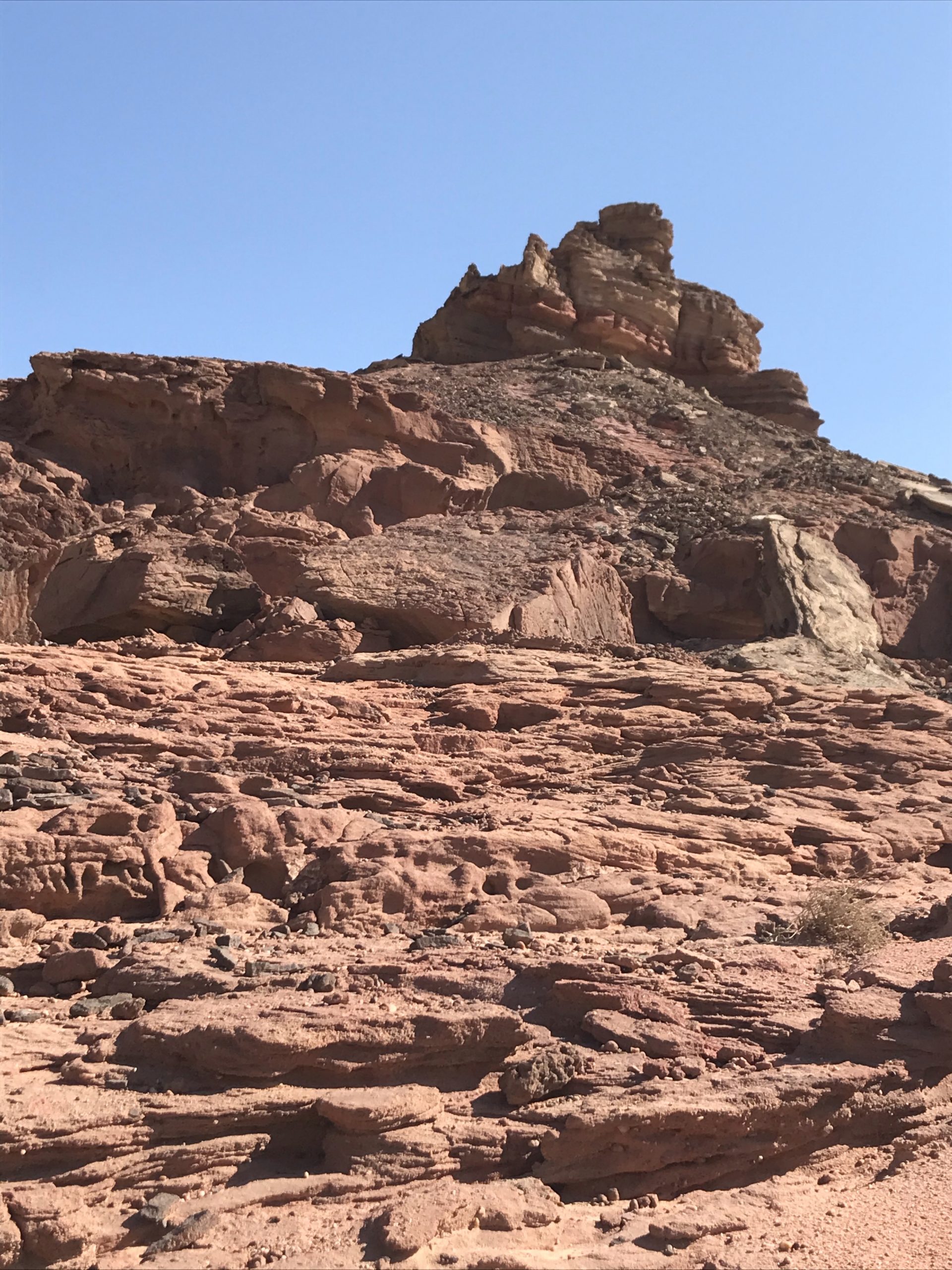
Timna Park
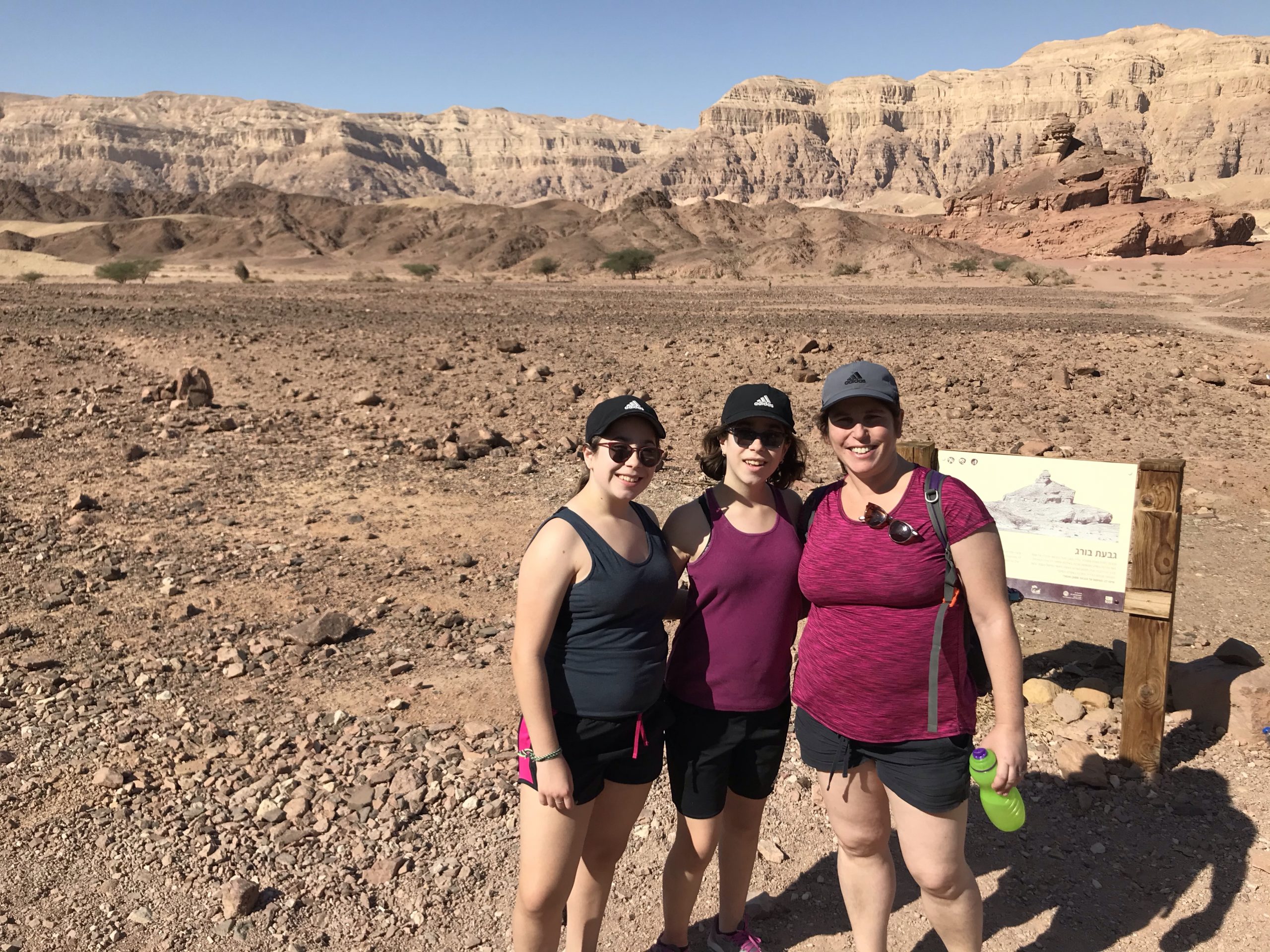
The hikers
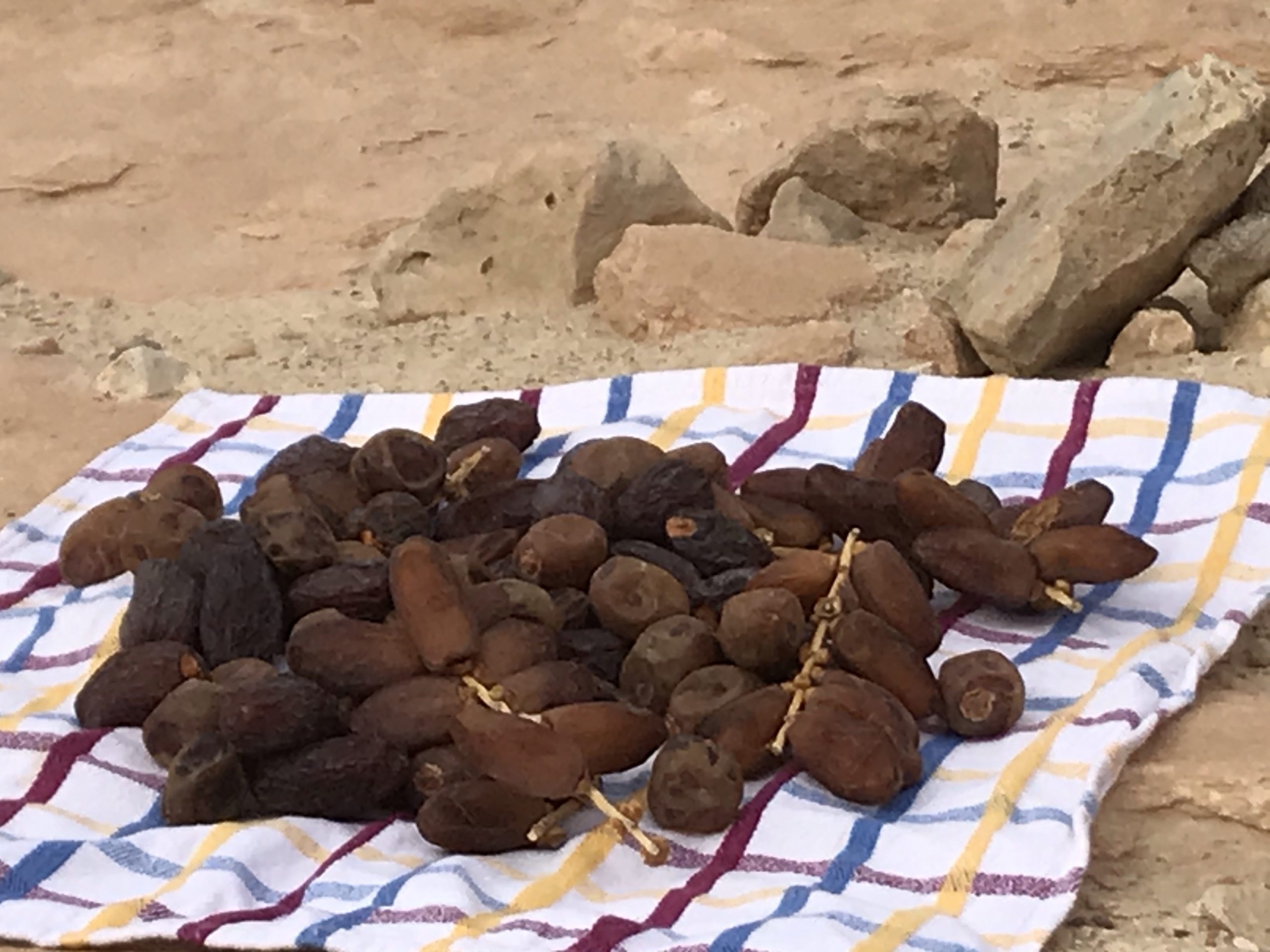
Our fresh dates – can you recognize three different types?
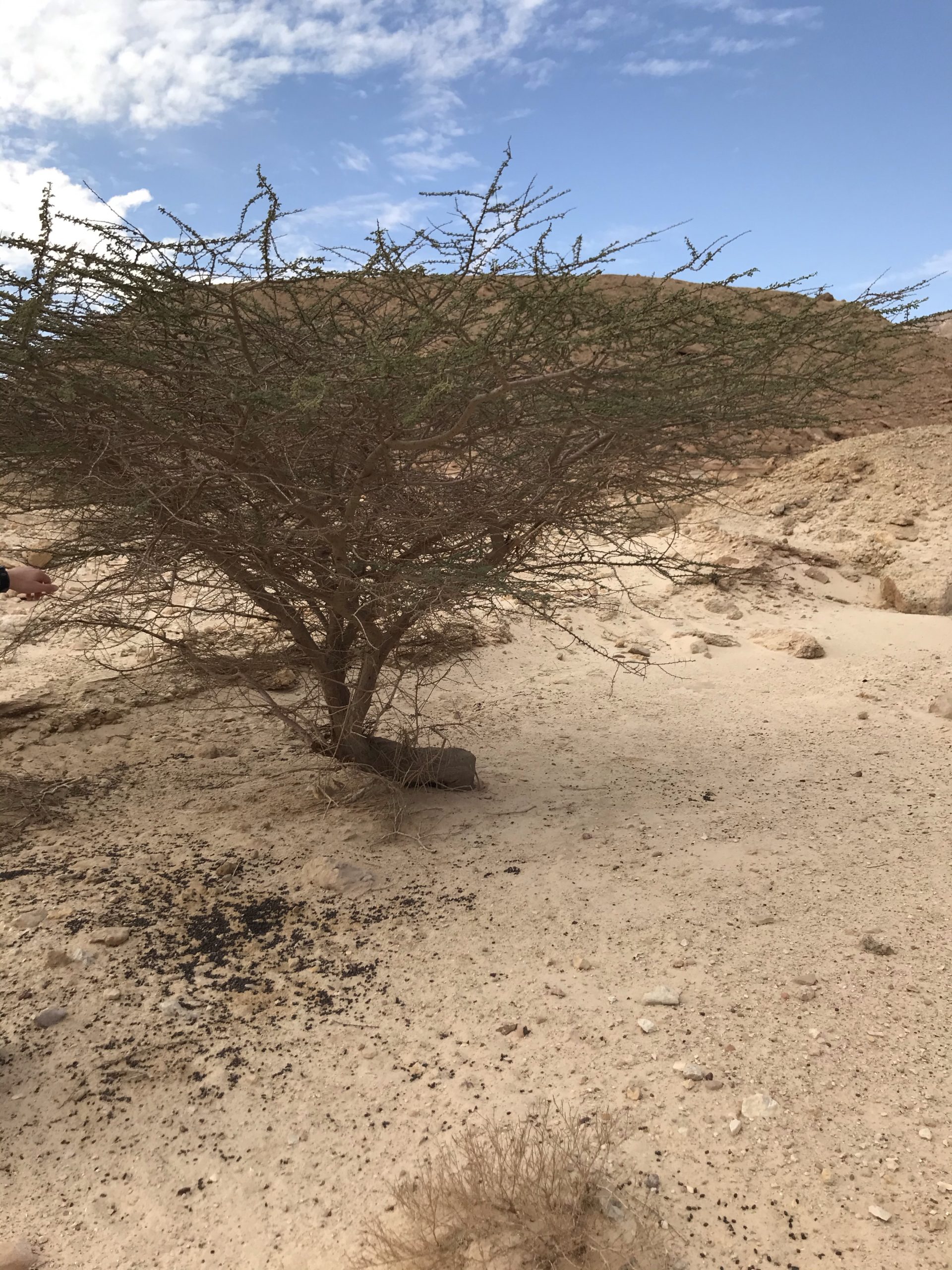
The Acacia Tree – would you use this for building your furniture or structure?