Today, Alexandra and I joined our mom on a trip with Pardes (where she is studying this year). This is the first part of a two part blog posts about the trip.
We started the trip at 8 am, and we drove on a bus to two different Bedouin towns.
The first Bedouin town we went to was a recognized town, called Lakia. Being a recognized Bedouin town means that there is running water, garbage pickup, and all of the things many people take for granted, but all of the unrecognized villages don’t get those things.
When we were in Lakia, we met with a Bedouin woman named Naama, who is one of the founders of an organization for women’s empowerment for Bedouin women.
This organization helps educate women and children, and helps women earn a living by making and selling embroidery. Some men and other people in the Bedouin society don’t really want girls to go to school until 12th grade. “Every time they attack us it makes us stronger. We are not going backwards,” Naama said.
Naama also shared how she would pretend to get hurt so that she could go to the health clinic to talk to other women because it was socially unacceptable for women in Bedouin Society to visit each other in their homes.
After we met with Naama, we were given a tour by a local activist of an unrecognized village neighboring Lakia. This government had split this village into 4 different municipalities, so there was no municipality that actually helped and listened to the people of this town. Each municipality would just send the people in the village to a different municipality.
In unrecognized villages, it is illegal to build buildings, so many people have to share a small space, and all of the current buildings are also illegal. Also, the Israeli government is allowed to demolish unrecognized villages when ever they want.
Between visiting the two villages, we went to a viewpoint where we could see many other towns in the desert. I’ll write about the other part of the day in my next post.
– Naomi
Fun Fact: The color of the embroidery on the dresses of Bedouin women symbolize their personal status. Red means they are married, blue means they are a widow, and green and purple mean they are single.

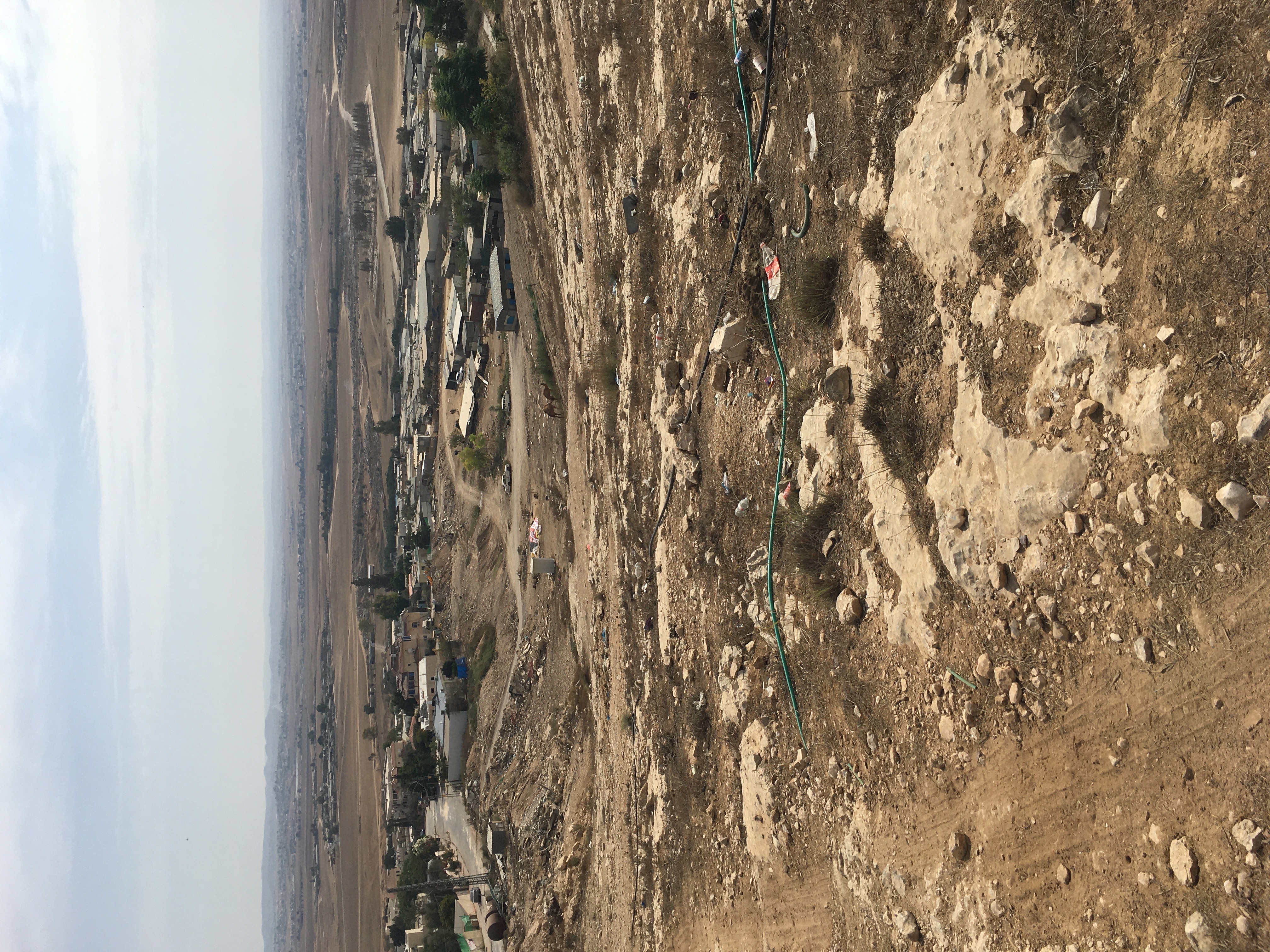 The view of an unrecognized village